Development and Evaluation of an Augmented Reality-Supported Educational Health and Safety Module Based on the Context-Based REACT Strategy for 3rd and 4th Graders
We are developing a teaching module that lets primary school students safely experience the hazards and risks they may face on the way to school, at school and around the school through augmented reality applications.

Why educational health and safety?
Safety anxiety caused by hazards and risky situations is a form of behaviour that affects quality of life, achievement and performance, and is engraved in our being at birth. In working life, these risks and hazards are addressed through the concept of occupational health and safety (OHS).
Although OHS may appear to belong to the adult world, individuals encounter various hazards and related risks during infancy, childhood and youth — at home, in parks and playgrounds, on the way to school and inside the school.
Turkey has the highest number of OHS-related deaths per 100,000 people in Europe. This indicates that occupational health and safety must be addressed at national level and that policies need to be developed.
In this research, the primary education dimension of OHS is addressed as educational health and safety (ESG): protecting children from all kinds of risky situations on the way to school, at school and around the school.
The context-based REACT strategy
ESG activities are designed around the five stages of the REACT strategy, which builds learning within a real context, and each stage is enriched with augmented reality applications.
Relating
New knowledge is related to students’ everyday experiences and prior knowledge.
Experiencing
Students explore, investigate and discover; they experience the feeling of finding out.
Applying
Concepts and knowledge are transferred into the real context and put into practice.
Cooperating
Experience and knowledge are shared with peers and consolidated through feedback.
Transferring
What is learned in context is carried over to new situations and to everyday life.
Risk areas covered
Activities are prepared by considering the risks most frequently encountered — and most likely to be encountered — in schools.
Fire
Fire hazards, prevention and response
Physical risks
Noise, lighting, pressure, radiation, vibration, thermal comfort
Chemical risks
Exposure to dust, smoke, gas and similar substances
Biological risks
Fungi, viruses, bacteria and hygiene conditions
Natural disasters
Earthquake, flood, storm and disaster preparedness
Indoor school risks
Health and safety in classrooms, canteens and corridors
Outdoor school risks
Safety on the way to school, playgrounds, car parks and the schoolyard
Signage and protection
Warning signs, markings and personal protective equipment
Components under development
ESG-AG Module
A teaching module of at least six activities based on the context-based REACT strategy.
Explore →Teacher Handbook
A guide containing the aims, learning outcomes, lesson plans and instructions of the module.
Explore →AR Markers
Markers that trigger the augmented reality applications used in the activities.
Explore →An interdisciplinary team
The project is carried out through the collaboration of researchers from Occupational Health and Safety, Educational Technologies and Primary Education.
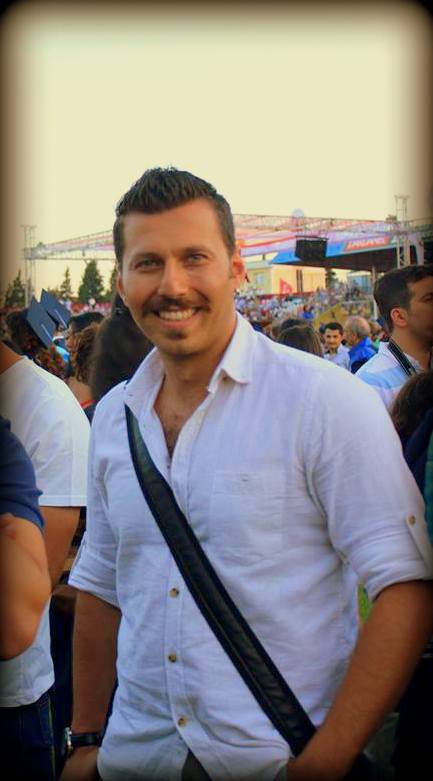 Principal Investigator
Prof. Dr. Sezgin AYGÜN
Çanakkale Onsekiz Mart University
Faculty of Sciences, Department of Physics
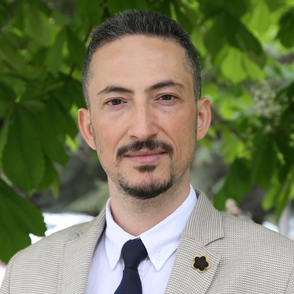 Researcher
Prof. Dr. Veysel DEMİRER
Süleyman Demirel University
Department of Educational Sciences
 Researcher
Assoc. Prof. Dr. Hanife ESEN AYGÜN
Çanakkale Onsekiz Mart University
Department of Primary Education
Do you have questions about the project?
Teachers, OHS specialists and parents are welcome to contact the project team.